Architecture
Primer is four processes, each owning exactly one thing.
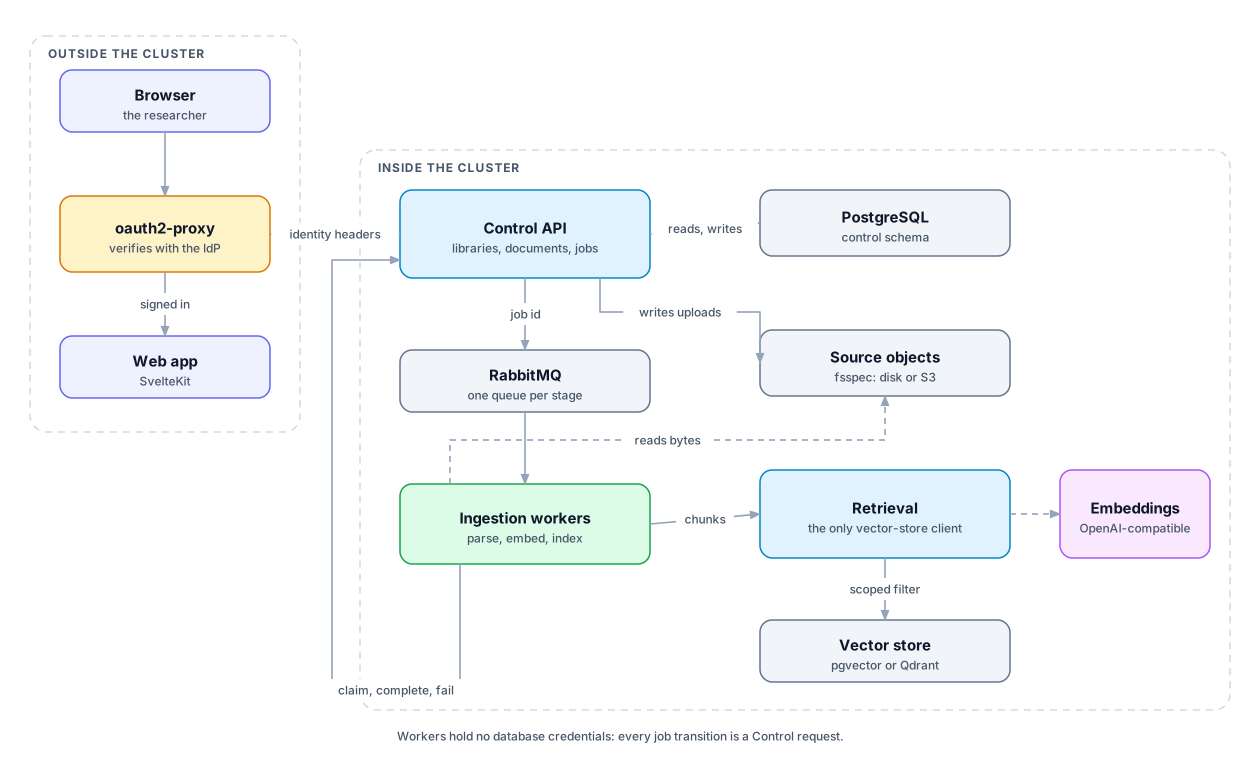
| Process | Owns |
|---|---|
| Control API | What exists, and who may see it |
| Ingestion workers | Turning files into passages |
| Retrieval | The vector store — exclusively |
| Web app | What the user sees |
The rules that shape it
One writer per fact. Control is the only process that writes job state. Workers ask Control to move a job forward and are told whether it applied. Two workers handed the same message therefore cannot both believe they are the one doing the work.
Workers hold no database credentials. Every transition is a request to Control. A compromised worker cannot read a library it was not handed.
Retrieval is the only vector-store client. Nothing else names a collection, a table, or a filter syntax. Swapping pgvector for Qdrant is a configuration change, and a conformance suite proves both behave identically where it matters.
Authorization is a SQL predicate, not a check. Listing many libraries applies the same rule as fetching one, because it is literally the same expression. There is no second code path to drift out of agreement.
Absence and denial look alike. Everything a user may not see returns 404. See Identity and access.
What is deliberately boring
Primer writes no parser, no chunking algorithm, no embedding model, and no vector-store abstraction. Each is a solved problem with good libraries, and a bespoke version would be a second thing to maintain that worked worse.
What Primer does own is the part nobody else can: which user may see which passage, and making sure a half-finished rebuild never answers a question.